Former Afghan Leader Karzai Pushes for Unity, Rights, & Public Voice
Former Afghan president Hamid Karzai says Afghans want a government based on the will of the people, with equal participation of all citizens in shaping the country’s future.

Former Afghan president Hamid Karzai says Afghans want a government based on the will of the people, with equal participation of all citizens in shaping the country’s future.

Former Afghan vice-president Sarwar Danish says critics of federalism misunderstand it, arguing it could help manage ethnic diversity and ensure fair power-sharing in Afghanistan.
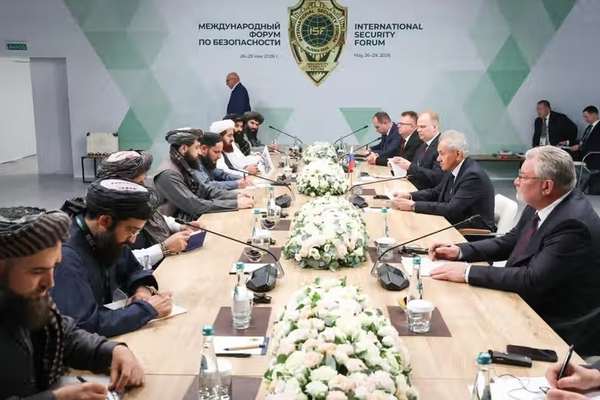
Russia’s foreign minister says instability in Afghanistan and the Middle East could threaten security in Central Asia and the CSTO region, warning that terrorism and drug trafficking remain ongoing concerns.
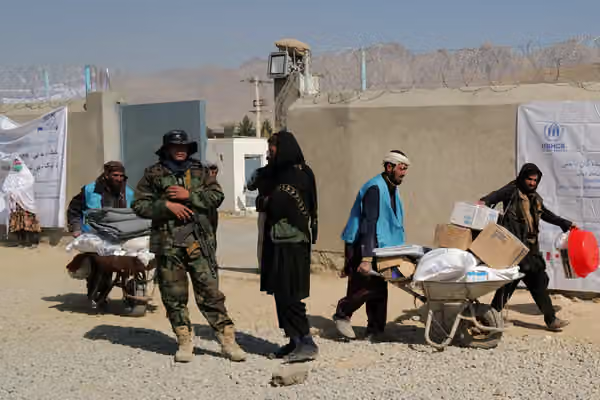
The UN says more than 7,600 families in eastern Afghanistan are still living in temporary shelters six months after a major earthquake, with over 221,000 people in urgent need of aid.

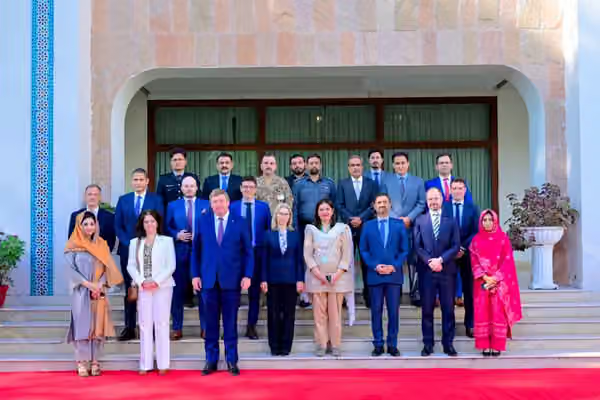
Diplomatic sources say the EU plans to invite a Taliban delegation to Brussels to discuss the return of Afghan migrants, though no formal invitation has yet been issued.

Former Afghan foreign minister Haneef Atmar says recent remarks on the Durand Line do not reflect Afghanistan’s historical realities and go against public sentiment.

The Taliban’s higher education minister has warned students in Khost to avoid political activity, saying support for the Taliban system is “mandatory”.

Sources told Afghanistan International that former Taliban finance minister Mullah Mutasim Agha Jan has been released after a brief detention, in a move seen as reflecting internal tensions within the group.

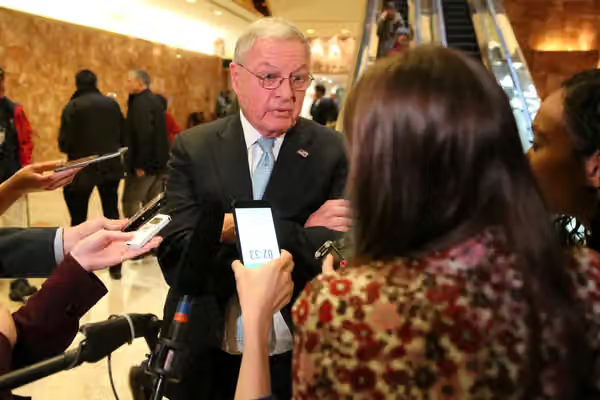
Former US Secretary of State Mike Pompeo defended Donald Trump’s talks with the Taliban, while describing former Afghan president Ashraf Ghani as “one of the most corrupt leaders” he had encountered.

Former Afghan interior minister Umer Daudzai says there are differences within the opposition over the Durand Line, rejecting remarks by Mohammad Mohaqiq recognising it as the official border.

UNICEF says the humanitarian situation in Afghanistan remains critical, with about 23.2 million people in need despite continued international assistance.

At Pakistan’s Darul Uloom Haqqania, long seen as a key center for educating Afghan Taliban, only 55 Afghan students remain, as enrolment declines following the expansion of religious schools inside Afghanistan.

Afghan politician Mohammad Mohaqiq says he recognises the Durand Line as the official border with Pakistan and supports the UN-defined political geography of Afghanistan.

The UN Human Settlements Programme says about 4.2 million people in Afghanistan will need emergency non-food aid and shelter in 2026, describing the needs as urgent and critical.

A US-based research institute says it has compiled data on more than 1,200 Taliban leaders, finding that only about 5.7% are under international sanctions.

Taliban officials say the group leader Hibatullah Akhundzada and interior minister Sirajuddin Haqqani visited Kajaki district in Helmand to lay the foundation stone for a mosque.

The Taliban’s commission for migrants says 5,450 Afghan migrants were deported from Pakistan and returned to Afghanistan in the past 24 hours, along with 352 from Iran.

Officials from the CSTO and the United Nations discussed regional security, stressing the need to monitor the impact of Afghanistan on peace and take preventive measures against emerging threats.

The UN says food prices in Afghanistan have risen sharply this year, with rice up 47 percent, wheat 20 percent, oil 10 percent and sugar 19 percent.

The National Resistance Council for the Salvation of Afghanistan says resolving the country’s crisis requires an inclusive political process involving all sides under UN and international oversight, rejecting Taliban calls for exiled figures to return.

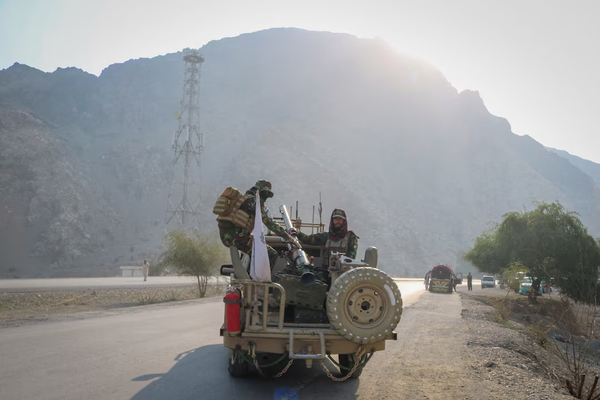
Pakistani state media say a detained member of Tehreek-e-Taliban Pakistan has confessed to receiving training in Afghanistan and alleged support for the group from Afghan Taliban and Indian intelligence.

As pressure grow on religious freedoms in Afghanistan, students at several universities say the Taliban are carrying out organised efforts to enforce religious conformity on campuses.