India's Membership In Quadrilateral Group On Afghanistan Is "Right", Says Russian FM

Russian Foreign Minister Sergey Lavrov called for India to join the Quartet with China, Pakistan and Iran on the issue of Afghanistan.

Russian Foreign Minister Sergey Lavrov called for India to join the Quartet with China, Pakistan and Iran on the issue of Afghanistan.
He stressed that for Moscow, Beijing, Islamabad and Tehran, interacting with India on Afghanistan is the "right thing to do".
On Tuesday, January 14, the Russian Foreign Ministry posted a video of Foreign Minister Sergey Lavrov's meeting with reporters on social media.
At the meeting, Sergey Lavrov stressed on the importance of India's participation in the talks on Afghanistan through the quadrilateral meetings of Moscow, Beijing, Islamabad and Tehran.
Russia, China, Pakistan and Iran held their third meeting on Afghanistan on the sidelines of the United Nations General Assembly in New York in October last year.
The foreign ministers of these countries compared their approaches to resolving Afghanistan's issues. India has also previously participated in processes related to Afghanistan within the framework of the "Moscow Format".
The Russian foreign minister's remarks come a week after Indian Deputy Foreign Minister Vikram Misri met with Amir Khan Muttaqi, the Taliban's foreign minister, in Dubai. During the meeting, India expressed its readiness to respond to Afghanistan's immediate needs.
Sergey Lavrov also called on India and Pakistan to hold talks to resolve their concerns.
Regarding the relations between the two countries, he said, "They can ask each other uncomfortable questions and seek answers. We will also help and try to strengthen cooperation, as this is beneficial for the region."
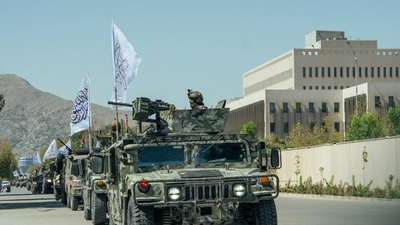

Zhao Xing, China's ambassador to Kabul announced that 'some parties' are trying to prevent the expansion of China's diplomatic relations with the Taliban. He stressed that his country is aware of this issue and expects the Taliban to pay attention to it as well.
The Chinese Ambassador to Kabul made the remarks on Sunday, January 12, during a meeting with the Taliban's Minister of Urban Development and Housing, Hamdullah Nomani.
According to a statement from the Taliban's Ministry of Urban Development and Housing, the Chinese ambassador said, "Some parties do not want political and diplomatic relations between China and Afghanistan to develop and continue, and are trying to create obstacles. China has paid attention to this issue and expects the Afghan side to pay attention to it as well."
The Chinese ambassador did not name a specific country, but this expression of concern is unprecedented given the Taliban's interest in relations with China. The Taliban, which has strained relations with the West, especially the United States, has tried to expand its relations with Russia and China, two important members of the Security Council.
Meanwhile, India, Saudi Arabia, and the United Arab Emirates have also taken initial steps in improving relations with the Taliban.
Hamdullah Nomani, the Taliban's Minister of Urban Development and Housing, said that Afghanistan and China have long-standing political and economic relations, and both sides are committed to expanding and strengthening these relations.
He suggested that Chinese investors be encouraged to participate in construction projects, especially the Kabul New City project.
Regarding investment in the new city of Kabul, the Chinese ambassador in Kabul said that it is necessary to specify the conditions, facilities and details related to the investment in order to provide complete and transparent information to Chinese investors and encourage them to participate in this project.
After three years of the Taliban's rise to power, China has provided political support to the Taliban in the United Nations Security Council, but it has not taken serious steps to invest in Afghanistan and reduce the group's isolation.
The Taliban had hoped that China, the world's second-largest economy, would replace Western countries in Afghanistan, but Beijing has not met this demand.

Amid reports of secret discussions between Washington and the Taliban over the release of American prisoners in Afghanistan, a Taliban spokesman has said that the group is ready to exchange prisoners on its own terms.
Zabihullah Mujahid claimed that the Biden administration has not yet taken steps to exchange American prisoners.
"We hope that Afghan prisoners will be released from Guantanamo prison because it is a bilateral deal," he said.
George Glezmann, Ryan Corbett, and Mahmood Shah Habibi are three US citizens who have been held by the Taliban since 2022.
In exchange for the release of these American citizens, the Taliban has demanded the release of the last Afghan prisoner, Mohammad Rahim Afghan, from Guantanamo Bay. He is being held for alleged links to Osama bin Laden, the former leader of al-Qaeda.
Recently, an anonymous Taliban official told the Guardian that the group has postponed negotiations on a prisoner exchange until the beginning of the Trump administration.
The issue of the prisoner exchange between the United States and the Taliban has been complicated after the Taliban denied the arrest of Mahmood Shah Habibi, but US officials and Mahmood Shah's family believe that he is with the Taliban.
Ahmad Shah Habibi, the brother of Mahmood Habibi, said in an interview with Afghanistan International that in a phone conversation with US President Joe Biden, he was assured that his brother is one of the important issues in the negotiations with the Taliban.

The National Resistance Front (NRF) announced that it attacked the gate of the Taliban's military prosecutor's office in Kabul's 10th district on Tuesday evening, claiming that a Taliban 'military commander' was also killed in the incident.
The front said that the person accompanying the commander was also killed in the attack.
The National Resistance Front (NRF) issued a statement on Tuesday evening, without providing information about the identity of the "killed commander", and announced that two Taliban members were killed and several others were wounded in Kabul, but the Taliban has not yet commented on the matter.
The National Resistance Front (NRF) claims that members and officials of the military prosecutor's office, which was attacked on Tuesday evening, were involved in "torture, harassment, persecution and detention of former military personnel".
According to NRF's statement, a military vehicle of the group was destroyed in the attack.
Kabul residents on Tuesday reported an explosion near Haji Yaqoob Square in Shahr-e-Naw, Kabul.

Mortaza Behboudi, an Afghan-French journalist who was imprisoned by the Taliban for seven months, told France 2 that the Taliban "pulled out his teeth and tortured him with electric shocks and injected fluids into his body".
He said that he was tortured every day during the first three months of his imprisonment.
In an interview with France 2, Behboudi said that he had not seen the sky for seven months in the Taliban's intelligence prison. He said that the prisoners used to commit suicide in front of his eyes after being tortured by the Taliban.
Afghanistan International's findings show that 31 types of torture methods are inflicted on prisoners in the detention centres of the Taliban's intelligence directorates in Kabul and other provinces of Afghanistan.
Behboudi had arrived in Kabul in January 2023 to prepare a report on the situation in Afghanistan, and two days later, the Taliban arrested him.
The journalist was released from Taliban custody on October 18 after 284 days of detention.
Behboudi, who was born in Afghanistan and grew up in Iran, continued his career as a journalist after receiving asylum in France in 2015. He has also received the Bayeux Calvados-Normandy War Correspondents Prize in 2022.
The Afghan-French journalist said that he was arrested by a Taliban intelligence officer while he was preparing a report in front of the Kabul University.
"They handcuffed my hands and feet and covered my face," he said. Then, they took me to the basement of a building and flogged me for half an hour for seven days in a row," he said, adding that the Taliban accused him of spying for the French intelligence service.
In a part of his observations of the Taliban's prison, Behboudi said, "In this local prison, I saw people who were flogged in front of me and tied to the ceiling. A few hours later, they were no longer moving. They were dead. For the first three months, I was tortured every day. They pulled out my teeth, gave me electric shocks, and gave me forced injections. I couldn't have imagined surviving at all."
In his interview, Behboudi said that he was imprisoned in a two-or-three-square-metre cell with 12 other people, including ISIS members. He said that ISIS prisoners also tortured him for being a "Hazara and a Shia".
Behboudi said that after his release, he still spends his nights in fear due to the trauma of torture.
"I see two psychologists every week, I take medication every night to sleep," he said. I have nightmares every night."
Afghanistan International interviewed nine women and 29 men who were detained by the Taliban's central and provincial intelligence agency over the course of three years. Of these detainees, 18 were transferred to Kabul after a month of torture in different provinces, where they were tortured again.
Six of the prisoners said that they had been subjected to 16 forms of torture. Another 19 people have experienced nine types of torture, and 13 others have experienced two to five types of torture.
Of the 38 detainees, some required treatment during torture, but the Taliban took only two to the hospital and treated three others inside intelligence agencies.

The Afghanistan Women’s Light of Freedom Movement and the Powerful Women’s Movement of Afghanistan welcomed the declaration of the Conference on Girls' Education in Pakistan.
In separate statements, the movements called on Islamic countries and the international community to take practical measures to protect Afghan women and girls.
The Afghanistan Women’s Light of Freedom Movement said that girls' education is undeniable, which is recognised in Islamic teachings, international charters and the laws of countries. The movement has said that any attempt to restrict this right is contrary to religious principles and social justice.
The movement has considered the decrees and policies against girls' education as a continuation of cultural and social prejudices against women. The movement's statement said that the education of girls and women helps build a strong, peaceful and progressive society.
The Powerful Women's Movement of Afghanistan has called on all countries and international institutions to allocate more resources for girls' education. The movement's statement said that the allocation of these resources should become a priority in the educational programmes and public policies of Islamic countries.
The movement has stressed that extremist interpretations of religious teachings that restrict girls' education contradict the principles of Islam and perpetuate social prejudices and discrimination against women and girls.
The Women’s Light of Freedom Movement has urged Islamic countries and the world to offer scholarships to Afghan girls and women who have been deprived of education.
The Powerful Women's Movement of Afghanistan has praised global efforts to support the education of Afghan girls.
The International Conference on Girls' Education in Muslim Communities was held in Islamabad without the presence of the Taliban. The statement of the meeting emphasised that women's education in Islamic countries is supported by religion, the constitution and international law.
The conference's final statement did not mention the ban on women's education in Taliban-controlled Afghanistan, but opposed the ban on women's education in Islamic countries.