Afghan Consul In Bonn Resigns 'Under Pressure From German Government'

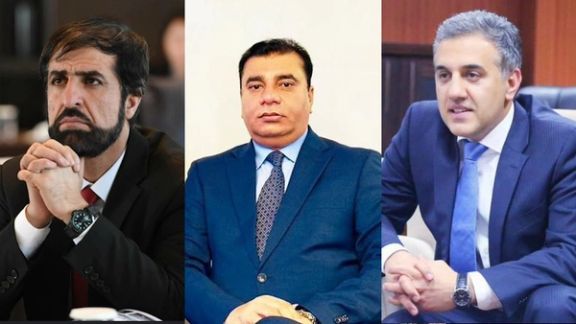
Lutfullah Sadat, Afghanistan's consul in Bonn, announced that he was submitting his resignation due to "restrictions and demands of the host country”.

Lutfullah Sadat, Afghanistan's consul in Bonn, announced that he was submitting his resignation due to "restrictions and demands of the host country”.
In early November, sources told Afghanistan International that Germany had asked Afghan diplomats to either engage with the Taliban or end their work.
In a statement published on the official Facebook page of the Afghan Consulate General in Bonn, Sadat said, "In view of some political considerations and restrictions of the host country and their request, and in order to prevent the closure or suspension of the consular activities of this mission, I resign from my responsibility as the Consul General of Afghanistan in Bonn, Germany."
Sadat wrote that after nearly two decades of working in the Afghan Foreign Ministry, he is resigning from the job. So far, the German Foreign Ministry has not commented on the matter.
Earlier, the ambassadors of the former Afghan government to some Western countries had announced an increase in pressure from host countries to encourage their interaction with the Taliban.
According to a report published by Afghanistan International on October 26, diplomatic sources had confirmed that in the latest case, Germany had asked the former Afghan ambassador in Berlin and the consul general in Bonn to end their work soon.
These sources had said that the ambassador and the consul general had been discussing with German officials for the past two months and justifying the continuation of their mission within the framework of the credentials of the republican government. However, according to reliable sources, Germany had said that their presence without relations with Kabul is useless.
The sources also confirmed that other countries have also increased pressure on Afghan ambassadors over the past month, sending a message to "engage with the Taliban, or end your diplomatic mission”.


In an investigative report, the Guardian described the Taliban's destruction of thousands of homes in Kabul as a catastrophic purge with an "ethnic motive".
In a report prepared in cooperation with four Afghan news organisations, it has been stated that large areas in mainly Hazara and Tajik-populated areas have been completely cleared.
According to the report, the Taliban's renovation programme in Kabul has left thousands of people homeless and an area of about 385 hectares has been destroyed.
When the Taliban seized power three years ago, the Taliban began a sweeping expansion programme in Kabul, with the justification that Afghanistan's historic capital needed to be modernised. However, a new study shows that the Taliban's reconstruction programme has left thousands of people homeless and has had horrific impacts on the most vulnerable communities.
Using satellite imagery, social media imagery, and testimonies from local residents, these findings provide the first comprehensive picture of the Taliban's ambitious reconstruction in Kabul, as well as its true cost.
Satellite analysis shows that 1.56 square kilometres (385 hectares) of Kabul city, equivalent to more than 220 football fields, were cleared between August 2021 and August 2024.
The British newspaper The Guardian, the Centre for Information Resilience’s Afghan Witness project, Lighthouse Reports and the Afghan news outlets Zan Times and Etilaat Roz media outlets that carried out the research said that the evidence showed that the destruction was partly "ethnically related".
The satellite analysis, carried out by Afghan Witness, showed that of the six most-affected districts – where at least 50,000 sq metres (12 acres) of residential properties were demolished – three were areas populated by the minority Hazara community and two were populated by the minority Tajiks.
According to the findings of this study, the most damages are related to District 13 or Dasht-e-Barchi of Kabul, which is a predominantly Hazara area.
‘Horrific destruction of informal settlements’
The study also analysed the widespread destruction of "informal residential neighbourhoods”.
The findings of the study show that in some cases, the destruction of slums that usually house poorer communities displaced by war or climate change has been "so brutal" that residents said some were injured and killed.
Residents of at least two residential neighbourhoods claim that the houses were demolished while family members were still inside. In a large slum in Kabul's District 22, evicted families claimed that a four-year-old child and a 15-year-old teenager died during the demolition.
"Women, children and elderly men were begging them to stop the demolition until we could find shelter, but they didn't listen," said one resident, who spent a decade in the neighbourhood after being displaced from Pakistan.
He claimed that after the demolition, his young niece also died in the summer heat due to a lack of shelter after their home was demolished.
Residents who tried to film such demolitions were reportedly beaten.
‘Challenges of Women Heads of Households’
It is said that many demolition projects are carried out in residential areas to build or enlarge roads.
Fakhrullah Sarwari, an urban planning engineer who worked with the former Afghan government, told the Guardian, "Most of these plans were part of the previous government's plans, but they were not implemented because they could not force people to evacuate the area."
"We need better mobility, but given that the majority of the population lives below the poverty line, demolishing houses to build wider roads will not solve the fundamental issues," Sarwari added.
Human rights groups also say women are particularly vulnerable after being evicted from their homes, warning that this could increase gender-based violence.
A woman who spoke to Zan Times revealed the problems of female-headed families.
The woman, who earns between $1 and $3 a day by providing house cleaning services, has struggled to get compensation from the Taliban after her home in a residential area north of Kabul was demolished. However, according to the Taliban's law for the promotion of virtue, she is not allowed to enter the Kabul municipality offices without a male guardian.
Another woman who lost her home in the same area is no longer able to work due to Taliban restrictions. Her family, who have been deprived of compensation, must rely only on her husband's meagre income, who is a shoemaker.
Of a dozen people evicted who were interviewed for the investigation, only one has been able to find a permanent home. Residents say fear is deterring them from protesting against the demolition of their homes.
"At first, they told us that they would compensate us and would not make us homeless, but when the houses were demolished, no one listened to us," said a woman whose 40-year-old home was demolished in August 2023.
According to the Guardian, when the woman's family could no longer afford to pay the bus fare, she stopped going to the municipal offices to ask for compensation.
The devastation comes months after the UN warned that Afghanistan's economy had "fundamentally collapsed" due to widespread food insecurity and the displacement of 6.3 million people inside the country.
Officials in the Taliban's municipality in Kabul have not commented on the findings. They have previously justified the demolition of informal settlements as reclaiming stolen land acquired by “opportunists and usurpers”. They also said that residential areas are often demolished for infrastructure projects.
The Taliban's Ministry for the Promotion of Virtue and Prevention of Vice announced that the ministry's ombudsman had arrested a woman and a man in Kabul on charges of extramarital affairs.
According to the Law of the Promotion of Virtue, the ministry considers it "immoral" for men and women to speak to each other.
The Taliban's Ministry of Promotion of Virtue reported on Monday, November 18, that those arrested in the fifth security district of Kabul city have been handed over to judicial institutions after conducting investigations.
The Taliban's ombudsmen continue to detain men and women across the country under the group's Law of the Promotion of Virtue, and recently arrested five people in Kandahar on charges of extramarital affairs.
The fate of those detained by the Taliban's Ministry for the Propagation of Virtue usually includes harsh punishments. These people are routinely flogged in public or sent to Taliban prisons.
Although the Taliban's Ministry of Promotion of Virtue does not provide exact details on how the punishments will be meted out, the group's Supreme Court flogs people in public almost every day on charges such as moral corruption and extramarital affairs.

Officials of the Islamic Republic of Iran and the Taliban discussed opportunities for joint investment in the development of rail infrastructure and increased transportation through the Khaf-Herat railway.
Mohammad Ishaq Sahebzada, the deputy minister of railways at the Taliban's Ministry of Public Works, visited Iran two days ago.
Mohammad Ashraf Haqshenas, a spokesman for the Taliban's Ministry of Public Works, wrote on social media platform X on Sunday, November 17, that officials of the group and the Islamic Republic emphasised on the "continuity and expansion" of cooperation.
Haqshenas wrote that during the Taliban delegation's meeting with Islamic Republic officials, "increasing transfers through the third section of the Khaf-Herat railway, upgrading the technical and specialised capacities of Afghan railway employees, and joint investment opportunities in the development of railway infrastructure" were discussed.
The Taliban's Ministry of Industry and Commerce has previously announced an increase in trade with the Islamic Republic. According to figures recently provided by the ministry, the value of the Taliban's trade with the Islamic Republic in the past seven months reached $1.827 billion.

Yue Xiaoyong, China's special envoy for Afghanistan, announced that Beijing has provided about $64 million in aid to Taliban-controlled Afghanistan in three years.
According to SIGAR, the United States has also sent more than $3 billion to Afghanistan during this period.
In an interview with the Beijing Club, China's special envoy for Afghanistan, said that his country has provided 470 million yuan ($64 million) in aid to Afghanistan in the past three years.
Although China does not recognise the Taliban government, it has appointed an ambassador in Kabul and accepted the Taliban's ambassador to Beijing.
After the withdrawal of US forces and the return of the Taliban to power, China has also tried to get involved in economic projects and contracts for mining, oil and gas in Afghanistan.
The amount of aid from China and the United States to Afghanistan reflects the two countries' approach to a country controlled by the Taliban.
US aid to Taliban-controlled Afghanistan in the past three years has been about 47 times higher than China's. The United States does not recognise the Taliban, but it has continued to send aid to Kabul after its withdrawal from Afghanistan.
The United States has collectively allocated $21.6 billion over the past three years to help Afghanistan and Afghan refugees, according to a SIGAR report released in October.
According to SIGAR, $3.33 billion of this money has been sent to Afghanistan under the guise of humanitarian and development aid.
US aid to Taliban-controlled Afghanistan has always faced criticism. Some critics of the Taliban, as well as the US special inspector, say that the Taliban may have had access to and benefited from the money flowing into Afghanistan.
However, the United Nations, which coordinates the aid, claims that the money is not being provided to the Taliban.
Prior to May last year, the Taliban-controlled Central Bank announced the arrival of $40 million packages in Kabul twice a week.
Following mounting criticism, the Taliban stopped making the aid public but at the same time, sources told Afghanistan International that $40 million packages were still arriving in Kabul.

Mahmoud Siadat, the head of Iran-Afghanistan Joint Chamber of Commerce, Industries and Agriculture said that despite announcing their readiness to implement joint trade projects with Iran, Taliban is not very willing to pursue these projects.
Referring to Uzbekistan, Siadat said that others have surpassed Iran in the field of investment in Afghanistan.
According to Iranian media, Siadat, said on Sunday that "other countries are now implementing very extensive projects" in Afghanistan.
He added that Afghanistan's neighbouring countries are establishing industrial factories, cultivating a variety of greenhouse crops, and even building universities in Afghanistan.
Referring to Uzbekistan's investments in Afghanistan, he said that Uzbekistan has signed joint agreements with Afghanistan and is now "one of Afghanistan's main trading partners”.
The Iranian official proposed the formation of a joint consortium with the Afghan private sector to pave the way for participation in the implementation of projects and coordination between the private sector of the two countries.
This comes even as the Taliban's Ministry of Industry and Commerce announced an increase in trade with the Islamic Republic.
The ministry said that Afghanistan had more than $1.827 billion in trade with Iran in the past seven months, including $30 million in exports and $1.8 billion in imports.
Afghanistan, as the sixth country for Iran's export destinations, had the highest amount of exports from Iran last year.