Taliban Publicly Flogs Nearly 40 People In One Month

The Taliban's Supreme Court has reported the flogging of at least 37 people, including women, from mid-August to mid-September.

The Taliban's Supreme Court has reported the flogging of at least 37 people, including women, from mid-August to mid-September.
The Taliban have convicted the men on charges such as running away from home, theft, blasphemy, extramarital sex, and same-sex relations.
The Taliban's Supreme Court announces the execution of the flogging sentences of the defendants in various provinces a few days a week.
According to statements published on the court's X social media account, the Taliban have flogged people in Maidan Wardak, Khost, Bamyan, Parwan, Ghazni, Helmand, Zabul, and Kabul provinces for more than a month.
The majority of the court's statements stated that the people were flogged in front of the public and local officials of the group.
The Taliban's implementation of corporal punishment has been criticised by human rights organisations.
The Taliban, however, has ignored calls to stop corporal punishment of citizens, and the group's officials have consistently emphasised on the implementation of the "Hudud Sharia law”.
Human rights organisations say that the Taliban's judicial system is completely substandard and that defendants are deprived of due process, such as the right to a lawyer.
In addition, during more than three years of the Taliban's rule, documented reports of Taliban members violating the group's laws, such as extramarital sex and same-sex relations, have been published, but the Taliban have not yet announced their prosecution in any case.
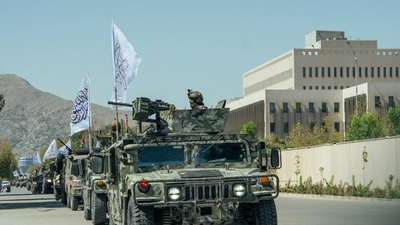

The Taliban on Monday suspended a polio vaccination campaign in Afghanistan, the Associated Press reported, citing the United Nations.
The reason for the suspension of the campaign has not yet been announced, and Taliban officials have not publicly commented on the matter.
Afghanistan and Pakistan are the only countries in the world which have not been able to stop the spread of this deadly and paralysing disease among children.
A senior World Health Organisation (WHO) official told The Associated Press that he is aware of discussions about changing the approach from door-to-door vaccination to vaccination in places such as mosques.
The World Health Organisation (WHO) has so far confirmed 18 cases of polio in Afghanistan this year. Except for two cases, all of them have been reported in the south of the country. This figure shows an increase compared to six cases in 2023.

The New York Times has reported that Trump assassination suspect Ryan Wesley Routh said last year that he was looking to recruit former Afghan troops to fight in Ukraine.
"We can probably purchase some passports through Pakistan, since it’s such a corrupt country," Routh had said.
On Sunday, media outlets reported a shooting near Trump's residence in Palm Beach, Florida.
Police officials said that the gunman was among the bushes near the golf course when Secret Service agents spotted the barrel of his rifle.
Police officials identified the suspect as Ryan Wesley Routh and said that he was stopped and taken into custody while he was fleeing.
The New York Times reported that Roth, 58, gave an interview to the newspaper in March last year and said that he was looking to recruit troops from the former Afghan government for the war in Ukraine.
He had said that he was planning to illegally transfer Afghan troops from Iran and Pakistan to Ukraine.
Routh claimed that dozens of Afghan soldiers have expressed interest in fighting in Ukraine.
It is unclear how successful Ryan Routh's efforts to recruit Afghan troops have been, but a former Afghan government soldier in Iran told the New York Times that he had been contacted about the matter and that if going to Ukraine meant the end of his illegal stay in Iran, he wanted to go to war.
Ryan Routh himself spent a few months in Ukraine in 2022. Roth had said he was willing to fight in Ukraine and be killed.

Sources told Afghanistan International that a delegation of Pakistani military and civilian officials travelled to Kandahar on Sunday to discuss the border issues between the two countries.
According to sources, the Pakistani delegation met with Mullah Shirin Akhund, the Taliban's governor in Kandahar.
The Pakistani delegation's meeting with Taliban officials in Kandahar is part of regular meetings of the Afghanistan-Pakistan Joint Border Committee, sources told Afghanistan International on Monday.
According to sources, the delegation held talks with Taliban border officials at the Angur Adda and North Waziristan border crossing before leaving for Kandahar.
The visit of Pakistani military and civilian officials to Kandahar comes after the recent clashes between Taliban and Pakistani border forces in Khost province.
In the clashes that took place about ten days ago, Pakistani media reported heavy casualties for the Taliban's border forces.
The Express Tribune newspaper, citing its sources, reported that 16 Taliban fighters were killed and 27 other Taliban fighters were wounded in an exchange of fire with Pakistani border forces in Zazai Maidan in Khost.
According to the report, two Taliban tanks were also destroyed in the clashes. According to the report, the clash between the Taliban and the Pakistani army took place between the morning of September 8 to the evening of September 10.
Taliban officials have not yet commented on the casualties.
Earlier, Geo News and Pakistan's state-run radio quoted sources as claiming that two Taliban commanders were also killed in the clashes.
Following the clashes, Khyber Pakhtunkhwa Chief Minister Ali Amin Gandapur announced that he would start talks on security issues with the Taliban government. Gandapur's remarks were met with serious reactions from politicians in the ruling parties.

On Sunday, the leader of the National Resistance Front (NRF) said that the Taliban has not been able to gain internal legitimacy and that the relationship between countries and this group is based solely on tactical interests.
He stated that the world is waiting for the decision of the Afghan people.
"We have no choice but to fight to open the way for negotiations and to fight for freedom," he added.
During this meeting, senior anti-Taliban political figures of the High Council of Resistance for the Salvation of Afghanistan delivered speeches. Emphasising on the need to learn from past mistakes, they called for unity and internal cohesion among the opposition.
During a speech, NRF leader Ahmad Massoud pointed to the Taliban's illegitimacy inside and outside the country, saying, "People are even ashamed to take pictures with the Taliban."
He referred to the recent meeting of the Organisation of Islamic Cooperation (OIC), where everyone refused to take pictures with Amir Khan Muttaqi, the Taliban's foreign minister.
Salahuddin Rabbani, the former foreign minister of Afghanistan, also described the Taliban as a pariah group at the international level, saying, "The world considers the recognition of the Taliban a source of shame."
Various countries, including Islamic countries, have not recognised the Taliban government.
Due to the lack of recognition, senior Taliban officials sit in a lower position than senior officials of other countries in international meetings in the region and have no place in the official photos of these meetings.
However, the group has been able to expand its relations with major regional powers such as China and Russia.
Ismail Khan, a jihadi commander, likened the Taliban to the leaders of the People's Democratic Party (PDP), saying that "the orders of Mullah Hibatullah are no less than those of Amin and Turki."
He said that Afghanistan has now become a big prison. The jihadi figure emphasised that only with national cooperation and cohesion can the country be liberated from the Taliban.
Ismail Khan added that their work at the current stage is more difficult than the first resistance. He stressed that relying on foreign forces cannot bring freedom to Afghanistan.
Atta Mohammad Noor, a senior member of Jamiat-e-Islami, accused the Taliban of increasing ethnic divisions. Referring to the shooting of Hazaras in Daikundi, he said that the Taliban have committed crimes and genocide against Hazaras.
However, ISIS claimed responsibility for the killing of 14 Hazara civilians in Daikundi, hence it is not clear why Noor blamed the Taliban for the killings.
"The basis of the Taliban's work is anti-Persian and fueling ethnic problems, which will be very harmful for Afghanistan today and the future," he added.
Mohammad Mohaqiq, the leader of the People's Islamic Unity Party of Afghanistan, said during a speech that even the early supporters of the Taliban today call the group terrorists.
Mohaqiq warned that if the Taliban do not agree to talks, they will enter the military phase. Mohaqiq, however, said that they do not want war and bloodshed.
He also pointed to the Taliban's internal grievances, saying, "Discontent has reached a peak within the group."
The Taliban believe that security and peace have been ensured in Afghanistan and there is no need for dialogue and negotiations. They see their government as inclusive and call former government and jihadi leaders "corrupt”.
The Taliban also insists that they do not stand on their jihadi principles and values for the sake of recognition.

Khyber Pakhtunkhwa Chief Minister Ali Amin Gandapur met with Hafiz Mohibullah, the Taliban's consul general in Peshawar, to discuss the peace talks.
Gandapur had previously asked Islamabad for permission to negotiate peace with the Taliban, but Pakistan's defence minister had said he did not have such authority.
The chief minister of Khyber Pakhtunkhwa on Thursday asked Islamabad to allow him to negotiate peace with the Afghan Taliban.
According to Pakistani media, Ali Amin Gandapur, during a meeting with the Taliban's consul general in Peshawar, spoke of his willingness to make serious efforts to establish lasting peace in Khyber Pakhtunkhwa. Gandapur also stressed on the importance of forming a people's jirga to resolve security issues in Khyber Pakhtunkhwa.
During a meeting with the Taliban's consul general in Peshawar, the chief minister of Khyber Pakhtunkhwa also emphasised on resolving trade problems on the border between the two countries and assured him that government officials will cooperate with Afghan refugees who have legal residency documents.
Ali Amin Gandapur had previously said that if the government did not allow him to hold peace talks with the Afghan Taliban, he would lead tribal elders to negotiate with the Taliban as a senior minister.
"Peace in the province depends on a peaceful Afghanistan," he said at a meeting with tribal leaders and party representatives, stressing that a clear policy and timetable are needed to eliminate militancy in the province.
Following the Khyber Pakhtunkhwa chief minister's remarks to negotiate with the Afghan Taliban, Pakistan's Defence Minister Khawaja Asif said that no province has the authority to negotiate with a foreign country. He accused Gandapur of endangering Pakistan's security.
Former Pakistani Prime Minister Imran Khan, who is currently in jail, has backed his party colleague Gandapur's plan to negotiate with the Afghan Taliban.