Iranian & Taliban Officials Discuss Helmand River Water Issues

Mohammad Javanbakht, the Deputy Minister of Energy of Iran, discussed the Helmand River water issues with Amir Khan Muttaqi, the Taliban's Foreign Minister.

Mohammad Javanbakht, the Deputy Minister of Energy of Iran, discussed the Helmand River water issues with Amir Khan Muttaqi, the Taliban's Foreign Minister.
Ahmad Zia, the Deputy Spokesperson of the Taliban's Ministry of Foreign Affairs, wrote in a statement on Tuesday that Javanbakht, has led a delegation to Kabul.
This Taliban foreign ministry official added, "The head of the Iranian delegation confirmed that a significant amount of water rights from the Helmand River has been secured this year and expressed hope to receive more water by the end of the year."
The Taliban’s Ministry of Foreign Affairs did not comment on the purpose of the Iranian delegation’s visit.
According to Zia, the Taliban’s Foreign Minister also promised during this meeting that if water is available, he would make efforts to ensure sufficient water flows towards Iran.
Muttaqi informed the Iranian delegation that the Kajaki Dam in Helmand has lost 45% of its capacity due to sedimentation.
Earlier, Siavash Akbari, an Iranian official in Sistan & Balochistan province of Iran, had stated that Afghanistan, by constructing the Kamal Khan Dam, has made Iran's access to the Helmand River water difficult and irregular. He added that the Iranian Ministry of Energy has plans for securing and transferring drinking and clean water.
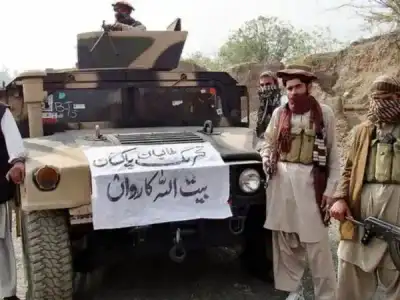

Yaqoob Mujahid, the Taliban's Defence Minister, claimed that their opponents are utilising extensive resources to create distrust within the group.
He emphasised on the need to eliminate distrust and disunity from within the Taliban.
Mujahid made these remarks on Tuesday at a graduation ceremony for students of the Technical and Vocational Education Administration in Kabul.
Mujahid and Taliban’s Interior Minister Sirajuddin Haqqani are senior figures within the Taliban who reportedly have disagreements with other officials over the group's policies. Despite these reports, they have stressed on the importance of unity and obedience to Mullah Hibatullah, the Taliban leader.
Unity and obedience are prominent themes in the speeches of the group's leader. In late June, Mullah Hibatullah expressed concern over internal differences within the Taliban in an audio message during Eid.
The Taliban leader stated that he was willing to step down from the leadership if it would resolve the group's disputes.
Earlier, the US-based Brookings Institution reported serious disagreements among Taliban leaders regarding the group's policies.
In that report, Mullah Hibatullah was described as an uncompromising and dogmatic figure, while Mullah Yaqoob was portrayed as a pragmatic personality who would be easier for the West to work with.
Previously, the International Research Council for Religious Affairs Pakistan reported in June that the Taliban have ideological, tribal, regional, and organisational differences among themselves, indicating that they are not a united group.

Matthew Miller, the US State Department spokesperson, denied Washington's financial support for the Taliban during a press briefing.
He dismissed the possibility of the Taliban accessing US aid to Afghanistan as incorrect and told reporters that the US does not financially assist the Taliban.
On Monday, July 22, during a press briefing, the US State Department spokesperson did not respond to a reporter's question regarding the weapons left behind by the US in Afghanistan but stated, "When it comes to the US funding of the Taliban, no, we flatly do not fund the Taliban."
Recently, SIGAR reported that the US State Department has failed to review the activities of institutions using $293 million in US aid to Afghanistan.
This body mentioned that the Taliban might have benefited from these funds.
SIGAR stated that the United States has provided over $17 billion in aid to Afghanistan since August 30, 2021.
The US policy after withdrawing from Afghanistan has focused on engagement with the Taliban, and so far, there has been no indication of a willingness to support military forces opposing the Taliban.
However, US citizens are against financial aid to the Taliban, and recently thousands, mostly US citizens, have signed a petition to cut financial assistance to the Taliban.
On Tuesday, Amir Khan Muttaqi, the Taliban's Foreign Minister, criticised the international community and neighbouring countries, stating that it is "laughable" that the world only issues orders but does not cooperate.
Without mentioning the millions of dollars in aid from the US and the international community to Afghanistan over the past three years, he said that the international community and neighbouring countries have not fulfilled their responsibilities towards Afghanistan.

Amir Khan Muttaqi, the Taliban's Foreign Minister, criticised the international community and neighbouring countries, stating that it is "laughable" that the world only issues orders, but does not cooperate with the group.
Recently, the US Special Inspector General for Afghanistan Reconstruction (SIGAR) stated that Washington has provided $17.19 billion in aid to Afghanistan since its withdrawal.
On Tuesday, July 25, at the "National Labor Conference" in Kabul, the Taliban’s Foreign Minister said that the international community and Afghanistan's neighbouring countries have not fulfilled their responsibilities towards Afghanistan.
Muttaqi claimed that the Taliban have ensured security, fought against ISIS and narcotics, but the international community has done nothing.
The Taliban’s minister stated that since coming to power, the group’s government has provided security for the people, but the main challenges remain employment and the economy. According to him, reducing poverty and unemployment is not solely the Taliban's responsibility, and the international community should also help them.
He added that the Taliban has eradicated narcotics, which is a global issue, and now Afghan farmers need alternative livelihoods and addicts need treatment, but the international community has not fulfilled its responsibility in this regard.
In May, SIGAR published a report stating that $2.8 billion of Washington's aid to Afghanistan has been spent on humanitarian and development assistance.
With the Taliban's takeover of Afghanistan, global aid to Afghanistan decreased, but donor countries continued their humanitarian assistance to the country.

The Islamic Development Bank reported that over the past year, it has treated more than 17,000 children suffering from acute malnutrition in Kandahar.
The bank added that this initiative was financially supported by the King Salman Humanitarian Aid and Relief Centre through UNICEF-supported clinics.
According to the bank, these children received therapeutic food packages through these clinics over the past 12 months.
The report states that during this period, approximately 16,000 therapeutic food packages, valued at over $953,000, were distributed to these children in Kandahar.
The Islamic Development Bank explained in its report that the total number of children treated under this programme was 17,543, including 9,940 boys and 7,603 girls.
Recently, Doctors Without Borders also announced that last year it treated 10,400 children, and in the first four months of this year, 2,416 children with malnutrition under the age of five in Kandahar, Herat, and Helmand.
This organisation painted a grim picture of the situation of children in Afghanistan in its report, adding that unemployment and poverty among the people have led to children in families suffering from malnutrition.

Ahmad Akbari, commander of the 444th Engineering Group of the Iranian Army's Ground Forces, stated on Tuesday that the project to seal the northeastern borders of the country is underway with the help of four engineering groups.
Akbari added that the project to seal the shared border between Razavi Khorasan and Afghanistan spans 300 kilometres.
The military commander mentioned that the engineering groups entered the region in May and are expected to complete the project within three years.
On Tuesday, Akbari said that the necessary infrastructure for implementing this plan on the northeastern borders of the country has been provided using domestic resources.
Earlier, the president ordered three billion dollars to be allocated to the General Staff of the Armed Forces for border sealing projects.
During a meeting with the district chief of Taybad, this Iranian military official mentioned that the walls of this project would each be four metres high, 3.7 metres long, and 1.1 metres thick.
Mehdi Shirdel, the district chief of Taybad, stated that the security of the northeastern borders plays a significant role in Iran-Afghanistan relations and can pave the way for increased interactions between the two countries.
Recently, another Iranian military official stated that one of the main objectives of sealing the Iran-Afghanistan border is to prevent the illegal entry of Afghans into the country.