Taliban Delays Tamadon TV Broadcast Suspension Until Saturday

Tamadon TV announced that the Taliban's Ministry of Justice has delayed the suspension of its broadcasts until Saturday.

Tamadon TV announced that the Taliban's Ministry of Justice has delayed the suspension of its broadcasts until Saturday.
Earlier, the network reported that a delegation from the Taliban's Ministry of Justice entered its building on Thursday afternoon to stop its broadcasts.
Tamadon TV posted on its social media platform X that shortly after the delegation arrived to halt the broadcasts, and following some contact with Taliban officials, the delegation announced "the delay for suspension of Tamadon TV broadcasts until Saturday."
Sources informed Afghanistan International that a delegation from the Taliban's Ministry of Justice went to Tamadon TV's office in Kabul to cut off its broadcasts. Simultaneously, a ticker ran during the broadcasts stating, "It is likely that this media's broadcasts will be cut off within minutes."
Sources said that the Taliban "raided the Tamadon TV building on Thursday afternoon without prior notice to stop its broadcasts." The Taliban has not yet commented on this matter, and the reasons for suspending the broadcasts of this private media outlet remain unclear.
In 2022, armed Taliban members also raided the Tamadon TV building in Kabul. According to reports, the Taliban forces left the media outlet after half an hour of "intimidation.” At that time, Taliban members told the TV officials that it was a "mix-up."
Tamadon is a private television network established in 2006 by Asif Mohseni, a Shia religious leader.
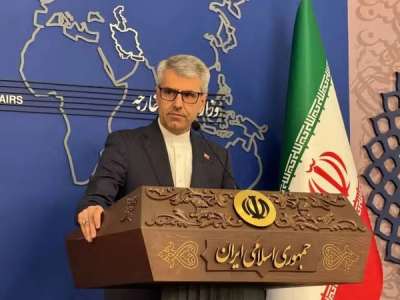
Zamir Kabulov, the Russian special envoy for Afghanistan, stated that recognising the Taliban government is not the only condition for Afghanistan’s rejoining the Shanghai Cooperation Organisation (SCO).
Kabulov affirmed that Moscow supports Afghanistan’s accession to the organisation even prior to recognising the Taliban.
However, he noted that Afghanistan must stabilise its economy for other SCO members to back its inclusion.
The Russian envoy acknowledged that the SCO is primarily an economic organisation, and Afghanistan can join by improving its economic situation.
Previously, Russian President Vladimir Putin had emphasised on the formation of an inclusive government with the participation of all ethnic groups in Afghanistan. Putin stressed on the importance of ensuring that all United Nations-level agreements, including the formation of an inclusive government, are implemented.
On Tuesday, in Saint Petersburg, Putin also highlighted the importance of maintaining relations with the Taliban.
He explained that Uzbekistan’s main challenge is access to the seas, stating, “There are various options here, including developing logistics through Afghan territory.”
Putin emphasised that stability in Afghanistan is crucial for both Uzbekistan and Russia in this regard.

Vladimir Putin, the President of Russia, in his latest remarks, emphasised on the need for the formation of an inclusive government with the participation of all ethnic groups in Afghanistan.
Putin stated that it is essential to ensure the implementation of all agreements at the UN level, including a government with the participation of all ethnic groups in Afghanistan.
On Tuesday, in Saint Petersburg, Putin also emphasised on the importance of maintaining relations with the Taliban.
During a meeting with media executives in Saint Petersburg, the Russian President mentioned that during his trip to Tashkent, he discussed Afghanistan with Shavkat Mirziyoyev, the President of Uzbekistan.
He explained that one of Uzbekistan's challenges is access to the seas. "There are various options here, including developing logistics through Afghan territory," he said.
He further stressed that stability in Afghanistan is crucial for both Uzbekistan and Russia.
Putin said, "We must ensure that all agreements at the UN level are implemented, including a government with the participation of all ethnic groups in Afghanistan. This is a delicate and very important issue. But we need to establish relations with the Taliban."
Putin added, "We need to improve relations with the neighbouring country somehow, especially since Uzbekistan has a long border, and we need to ensure security and, I repeat, develop logistics."
A few days ago, during his visit to Tashkent, the Russian President also emphasised on the need to establish relations with the Taliban, as the group controls Afghanistan and its territories.
Putin stated, "We must act considering this reality and adjust our relations accordingly."
Without elaborating on the existing problems in Afghanistan, Putin said, "Everyone is aware of them."
However, the Russian President added that how to establish relations with the current power, the Taliban, is another question, but there must be some form of relationship with them.
He mentioned consulting with regional partners, including in Central Asia, regarding relations with the Taliban and said that they take into account the opinions of each of their partners and friends and will be coordinated on this issue.

The Norwegian government announced that it will provide 151 million krone (approximately 14 million USD) in humanitarian aid to Afghanistan.
In a statement, the Norwegian government said that women and girls in Afghanistan are at risk and Norway needs contact with the Taliban to support them.
On Tuesday, the Norwegian government in a statement added that its total aid to Afghanistan in 2024 will amount to 550 million krone (approximately 52 million USD).
The government assured that this financial aid will not fall into the hands of the Taliban, but will be channeled through international organisations.
Espen Barth Eide, Norway's Minister of Foreign Affairs, stated in the announcement, "It is important to continue our commitments to Afghanistan. In Afghanistan, women and girls are at risk and need support. Therefore, we need to communicate with the Taliban to clearly express our views on their unacceptable treatment of women and girls."
In May, Norway hosted several members of civil society, women's rights activists, and Taliban representatives. This policy of hosting and dialogue has been criticised by opponents of the Taliban as Norway's disregard for the Taliban's behaviour and policies.
The statement quoted the Norwegian Minister of International Development, who said, "Afghans are suffering from a prolonged humanitarian crisis. According to UN estimates, nearly 23 million people need humanitarian assistance."
The Norwegian official also mentioned the casualties and damages caused by floods in northern and western Afghanistan, emphasising on the importance of addressing the situation of internally displaced persons and refugees in Afghanistan and neighbouring countries.
Norway stated that its aid will be delivered through the Red Cross, the United Nations, and other international relief agencies, focusing on education, health, migrants, and internally displaced persons.

Matthew Miller, the spokesperson for the US State Department, urged countries to adhere to the travel ban on Taliban officials.
Miller stated that governments must obtain authorisation for the travel of Taliban officials who are on the United Nations sanctions list and respect this process.
He said, "member-states hosting UN-sanctioned Taliban members must seek permission for travel through an exemption process”.
He added that the authorisation must be obtained through the travel exemption process as specified in UN Sanctions Committee Resolution 1988, and, it is important for member states to follow this procedure.
On Tuesday, the Taliban's Interior Minister, Sirajuddin Haqqani, made an official visit to Abu Dhabi and met with high-ranking Emirati officials, including the President of the UAE, in Abu Dhabi.
He made this trip despite the US offering a $10 million reward for Haqqani's capture due to his involvement in deadly terrorist attacks. This reward remains listed on the US Department of Justice's website.
The Taliban stated that strengthening relations between the UAE and Taliban-controlled Afghanistan, digitising traffic management within the Interior Ministry, and facilitating visa issuance for Afghans were among the topics agreed upon by the UAE government and the Taliban's Interior Minister.
The reception of Haqqani at the level of the UAE President indicates the importance of this influential Taliban figure to the country.
Sources have indicated that he is likely to meet with US officials in the UAE during this trip.

On Wednesday, the United Nations Human Rights Office stated that the flogging of 63 men and women in Sar-e Pul province has “deeply disturbed" the organisation.
The office stated that corporal punishment, such as flogging, violates human dignity and Afghanistan's international obligations.
Richard Bennett, the UN Special Rapporteur on Human Rights in Afghanistan, also condemned the corporal punishment by the Taliban and called for an end to this practice.
On Tuesday, the Taliban had announced that 63 people, including 49 men and 14 women, were publicly flogged in the central stadium of Sar-e Pul province. The Taliban's Supreme Court stated that these individuals were charged with "theft, sodomy, and illicit relations”.
In response to this action by the Taliban, the UN Human Rights Office said, "We are deeply disturbed by the widespread, continued use of corporal punishment in Afghanistan and urge the de facto authorities to immediately cease all forms of corporal punishment. "
Richard Bennett, the UN Special Rapporteur on Human Rights in Afghanistan, also condemned the widespread flogging of men, women, and children in Sar-e Pul and Ghor for so-called "moral crimes" such as adultery and elopement. He emphasised that this practice violates Afghanistan's obligations to prohibit torture and other forms of cruel and inhuman punishment, calling for an immediate end to it.
The UN Human Rights Office stated that public punishments increase violence against women. The office said that women who are publicly punished for adultery and other “so-called” moral crimes are more at risk of domestic and social violence.
The Taliban has repeatedly rejected criticisms from governments and human rights organisations regarding corporal punishment in Afghanistan. The Taliban has accused foreign governments and organisations of interfering in its internal affairs and stated that these punishments have religious legitimacy and will not be abandoned.
