Media Freedom In 2024: Afghanistan Plummets To Bottom Of Rankings

Reporters Without Borders (RSF) has released its latest ranking on global media freedom and placed Afghanistan among the most dangerous countries for journalists.

Reporters Without Borders (RSF) has released its latest ranking on global media freedom and placed Afghanistan among the most dangerous countries for journalists.
The country has slipped from 152nd to 178th out of 180 nations.
According to RSF, Afghanistan has seen a significant decline in press freedom, positioning it among the top five most dangerous countries for journalism, alongside Iran, North Korea, Eritrea, and Syria.This year, 13 journalists had been detained by the Taliban, with five still in custody.RSF reported that the Taliban consistently harassed journalists since returning to power. The group has imposed numerous restrictions on local media and established stringent limitations on freedom of expression and access to information.
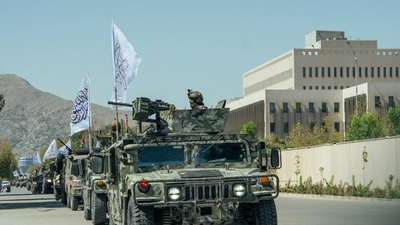

The Special Inspector General for Afghanistan Reconstruction (SIGAR) said that since the withdrawal of US forces from Afghanistan, Washington has provided USD 17.19 billion in aid to the country.
This assistance includes humanitarian assistance to Afghanistan under Taliban control and the expenses of evacuating and accommodating former Afghan colleagues of the United States.
According to SIGAR's latest report released on Friday, over USD 2.8 billion has been allocated for humanitarian and developmental aid to Afghanistan.
Additionally, USD 5.36 billion of this assistance has been designated for the evacuation, accommodation, and expenses of former US colleagues in Afghanistan.
Apart from this, USD 5.53 billion has been spent on hosting Afghan refugees in the United States. SIGAR also noted the allocation of USD 3.5 billion from the Afghan Central Bank's assets to the Afghan Trust Fund in Switzerland among the US aid to Afghanistan.
The report emphasises that the United States remains the largest donor to Afghanistan under Taliban control.
ISIS
SIGAR stated in its report that ISIS-Khorasan continues to recruit forces in Afghanistan and the region.
The US Special Inspector for Afghanistan highlighted ISIS' focus on involving foreign citizens in its attacks and recruiting non-Salafists.
Despite the Taliban's claim that no terrorist groups are active in Afghanistan, reports suggest that organisers of deadly attacks in Iran and Pakistan received training in Afghanistan. Both Al-Qaeda and Tehreek-e-Taliban Pakistan (TTP) are also active in the country.
The SIGAR report states that the Taliban's fight against ISIS-Khorasan is more focused on internal threats posed by the group than its external operations.

Mohammad Reza Kazemi, Iran’s Deputy Head of the Drug Control Headquarters, said that there is still no documented evidence of a reduction in drug production in Afghanistan.
Kazemi pointed out that the activities of smugglers in the region indicate that there hasn't been any significant decrease in drug production.
In April 2022, the Taliban banned poppy cultivation as well as its production, consumption, purchase, and sale.
In a decree attributed to Hibatullah Akhundzada, the leader of the group, it was announced that anyone engaging in poppy cultivation would have their land destroyed and face consequences.
However, regional countries continue to report seizure of drugs originating from Afghanistan.
In February, Zabihullah Mujahid, the Taliban spokesperson, confirmed that while there had been some progress in the fight against drugs in Afghanistan, drug trafficking still persists.
IRNA reported on Friday that Kazemi stated that even though reports from international organisations regarding a reduction in drug production in Afghanistan have been presented, Iran, being at the forefront of the fight against drugs, has no evidence of a decrease in drug production in Afghanistan.
He emphasised that reducing opium production in Afghanistan requires global community support.
The Iranian official highlighted that the livelihoods of people in Afghanistan, particularly in densely populated areas, rely on drug production.
According to him, replacing poppy cultivation in Afghanistan is beyond the capabilities of the Taliban.

UNAMA reported that despite the declaration of a general amnesty, the Taliban continued to detain, torture, and kill former government employees and military personnel.
The office has documented 38 cases of detention, 10 cases of torture and abuse, and at least four cases of extrajudicial killings of former government employees and military personnel by the Taliban over a three-month period from January 1 to March 31 of the current year.
UNAMA's report, which covers the human rights situation in Afghanistan during this period, was released on Thursday.
The United Nations stated that the Taliban persist in detaining, torturing, and killing former government employees and military personnel despite the group’s spokespersons' constant emphasis on the group's commitment to “general amnesty”.
Civilian Casualties
UNAMA's quarterly report also states that at least 79 civilians were killed and injured in explosions in Kabul over six days, between January 6 to 11.
According to the report, an explosion occurred in the predominantly Hazara neighbourhood of Dashte Barchi in Kabul on January 6, leaving five dead and 20 injured.
Another explosion occurred in the same area on January 11, killing three and injuring 35 others. While ISIS claimed responsibility for the first incident, no group claimed responsibility for the second explosion.
The report also mentions another explosion on January 9 that targeted a vehicle transporting Taliban prison staff, killing three and injuring 13. ISIS claimed responsibility for the attack, stating that it targeted Taliban personnel.
Additionally, a suicide attack took place on March 21 outside the Kabul Bank in Kandahar, leaving at least 25 dead and 50 injured. The attack targeted a group of Taliban police forces who went to the bank to collect their salaries. ISIS claimed responsibility of the attack.
UNAMA also reported that on March 18, Pakistani airstrikes in Khost and Paktika killed one person and injured two others. According to the report, on the same day, Taliban forces clashed with Pakistani border guards, resulting in the deaths of four civilians, including three children, and the injury of seven others.
Freedom of Expression
UNAMA stated in its report that in addition to the economic challenges, restriction on against media in Afghanistan, and arbitrary detentions of journalists persist.
It referred to four cases of detention of journalists and media staff in Kabul and Samangan, all of whom have since been released.
According to the report, the Taliban also continued physical punishment against suspects, with three executions recorded in February.

The National Resistance Front (NRF) has claimed that the Taliban is exploiting the anti-ISIS Khorasan narrative to gain benefits from regional countries.
According to the NRF, the Taliban seeks to create the impression that the ISIS Khorasan is recruiting Tajik nationals, aiming to justify a greater crackdown on opposition forces.
In a statement released on Thursday (May 2), the NRF accused the Taliban of seeking to gain legitimacy and attract regional attention under the guise of combating ISIS.
The statement emphasises that the Taliban and ISIS share similar goals, ideologies, and strategies, and have cooperated in their destructive pursuits over the years, complementing each other's operational capabilities.
Over the past two and a half years, the NRF has organised attacks against Taliban forces, and it considers the Taliban a regional security threat, just like ISIS.
The NRF dismissed the narrative of ISIS Khorasan recruiting Tajik citizens as dubious and suggested that those who had previously used the Taliban for their strategic objectives are now using ISIS to legitimise the Taliban.
The statement also accused the Taliban of creating a "false link" between the NRF and ISIS Khorasan to suppress resistance fighters further.

Sources from Pul-e-Charkhi prison have informed Afghanistan International that the Taliban officials have physically assaulted and tortured dozens of political prisoners who were on a hunger strike, demanding a review of their cases.
Sources indicate that these inmates number in the hundreds, most of whom hail from Panjshir and the northern regions of Afghanistan.
Following the crackdown on the protest in Pul-e-Charkhi, the Taliban transferred 220 inmates to the intelligence agency's Department 40, where they were tortured for a week, according to sources.
Relatives of these prisoners, upon visiting them in Pul-e-Charkhi, found many inmates with broken hands, feet, and heads.
This incident occurred two weeks ago.
Prisoners have complained that no human rights bodies or the United Nations have reviewed their situation, leaving them in limbo.
Neither the Taliban nor the UN's office in Afghanistan has released details regarding the Taliban's torture of inmates.
The US State Department recently reported that 90 percent of Taliban prisoners are political detainees.
The US State Department also said that last year, the Taliban kept people in long-term detention without any legal proceedings and systematically violated their right to legal representation.